

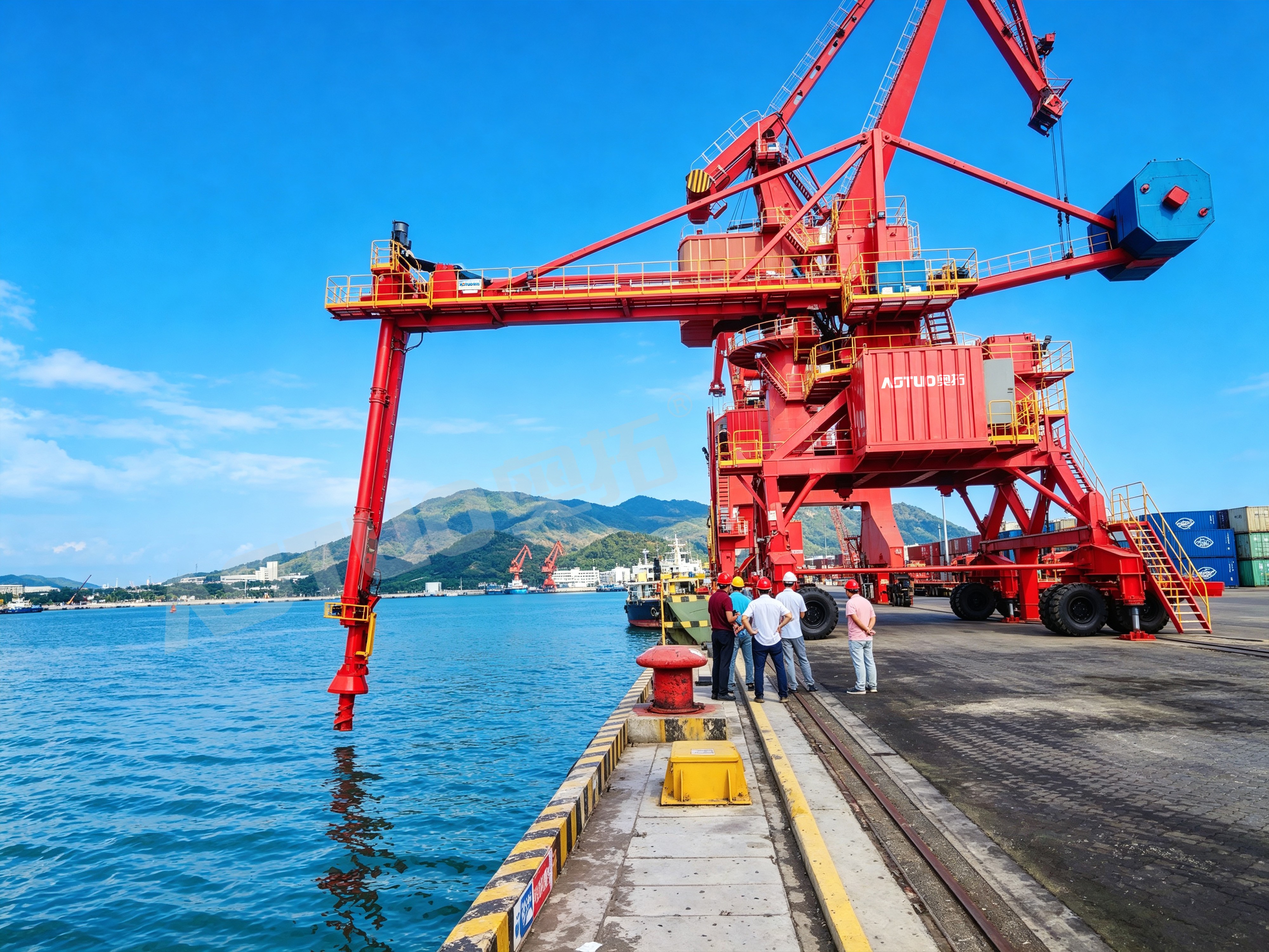
China Suppliers: AOTUO Launches Mobile Tire-Type Screw Ship Unloaders for Hainan Nanshan Port Factory
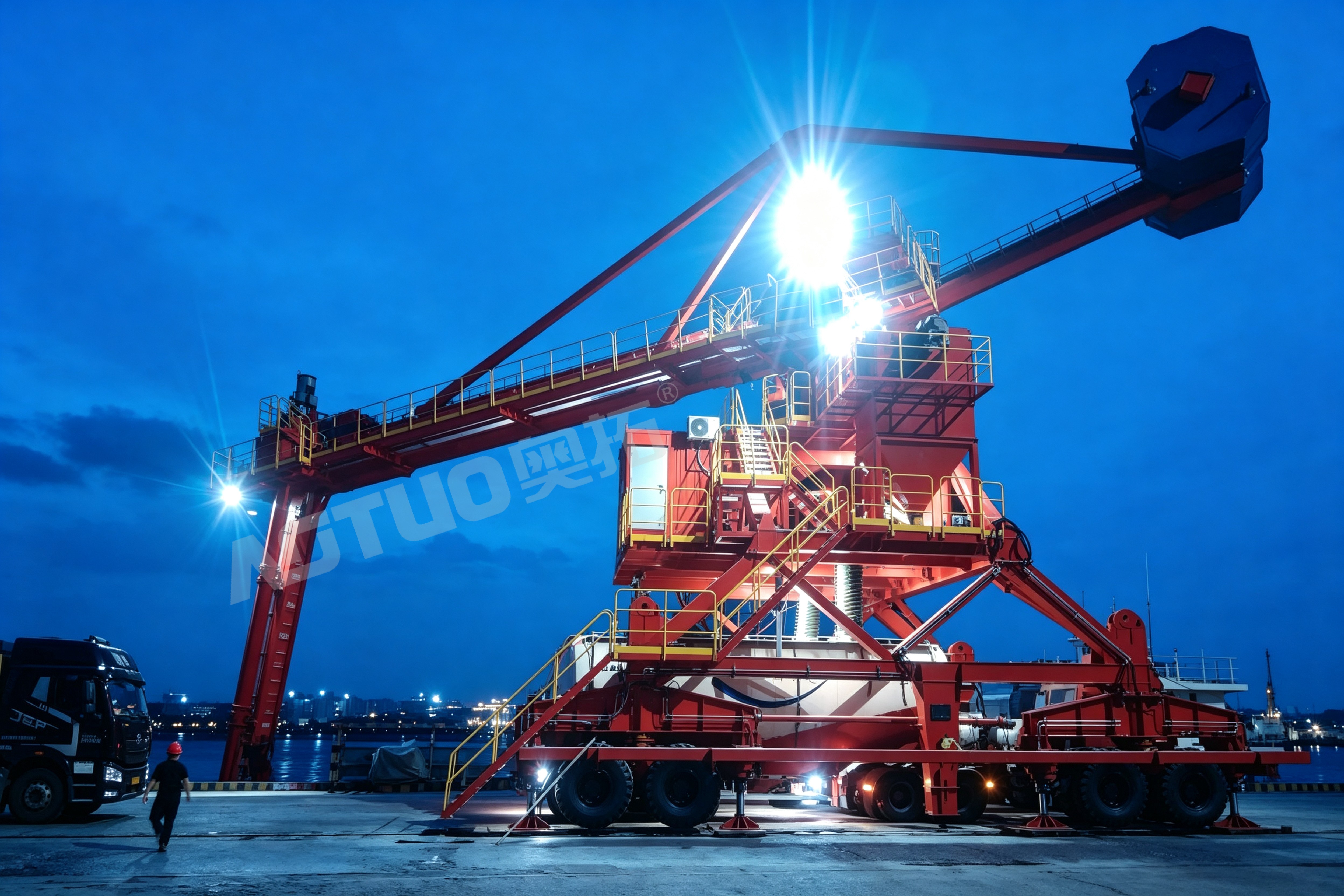
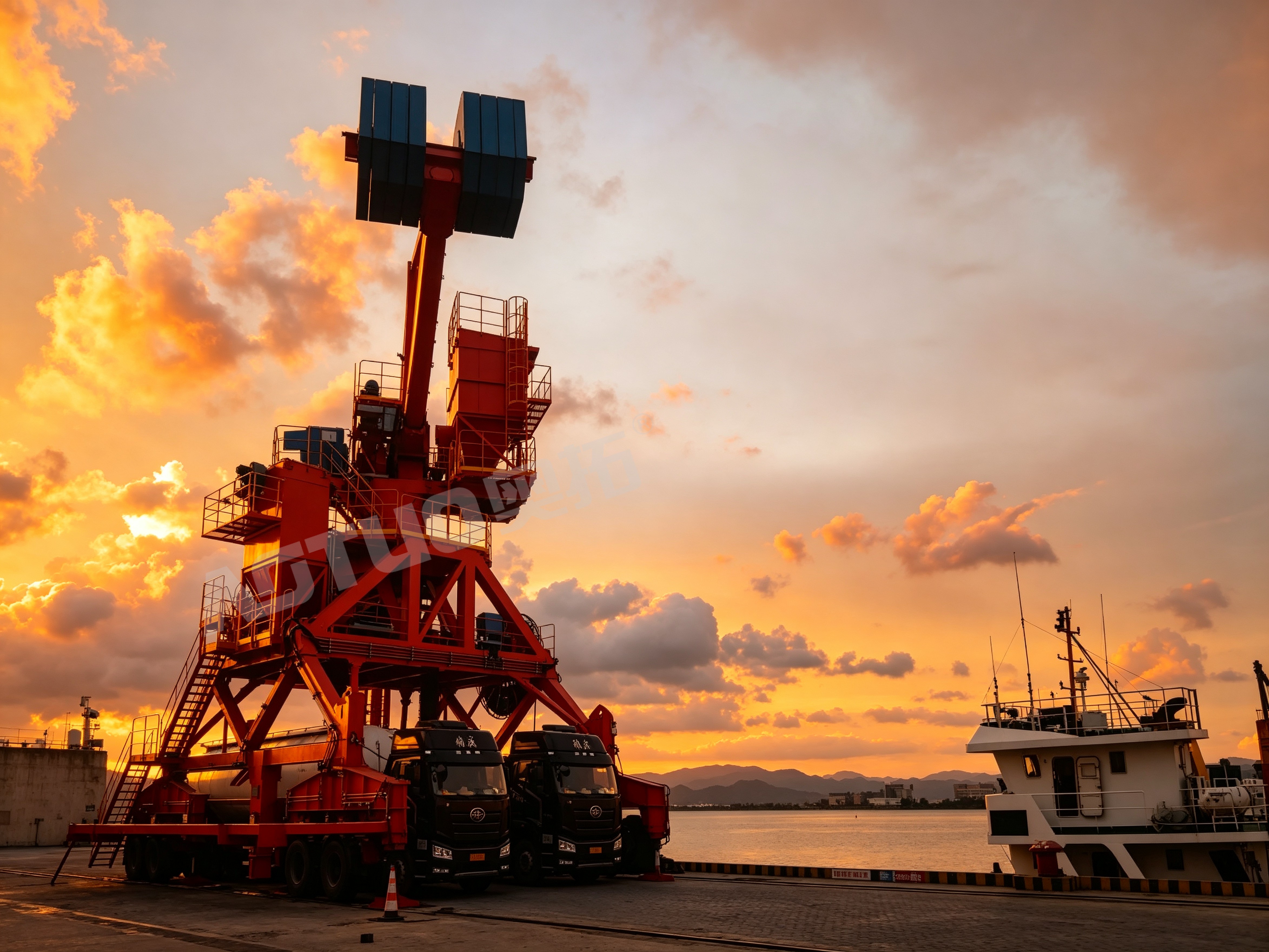
The equipment is equipped with a heavy-duty engineering tire chassis, and does not require tracks or concrete foundations.
During operation, the force is borne by hydraulic cylinders, ensuring safety and reliability. It can freely move and position, and can be parked at the rear during non-operation periods, releasing the resources of the dock shoreline and improving the efficiency of vessel berthing and unberthing.
The fully enclosed spiral conveying system and negative pressure dust suppression system are in line with the high standards of ecological and environmental protection in Hainan. The materials are conveyed throughout the process in a sealed manner, without any spillage or leakage, meeting the strict environmental protection requirements.
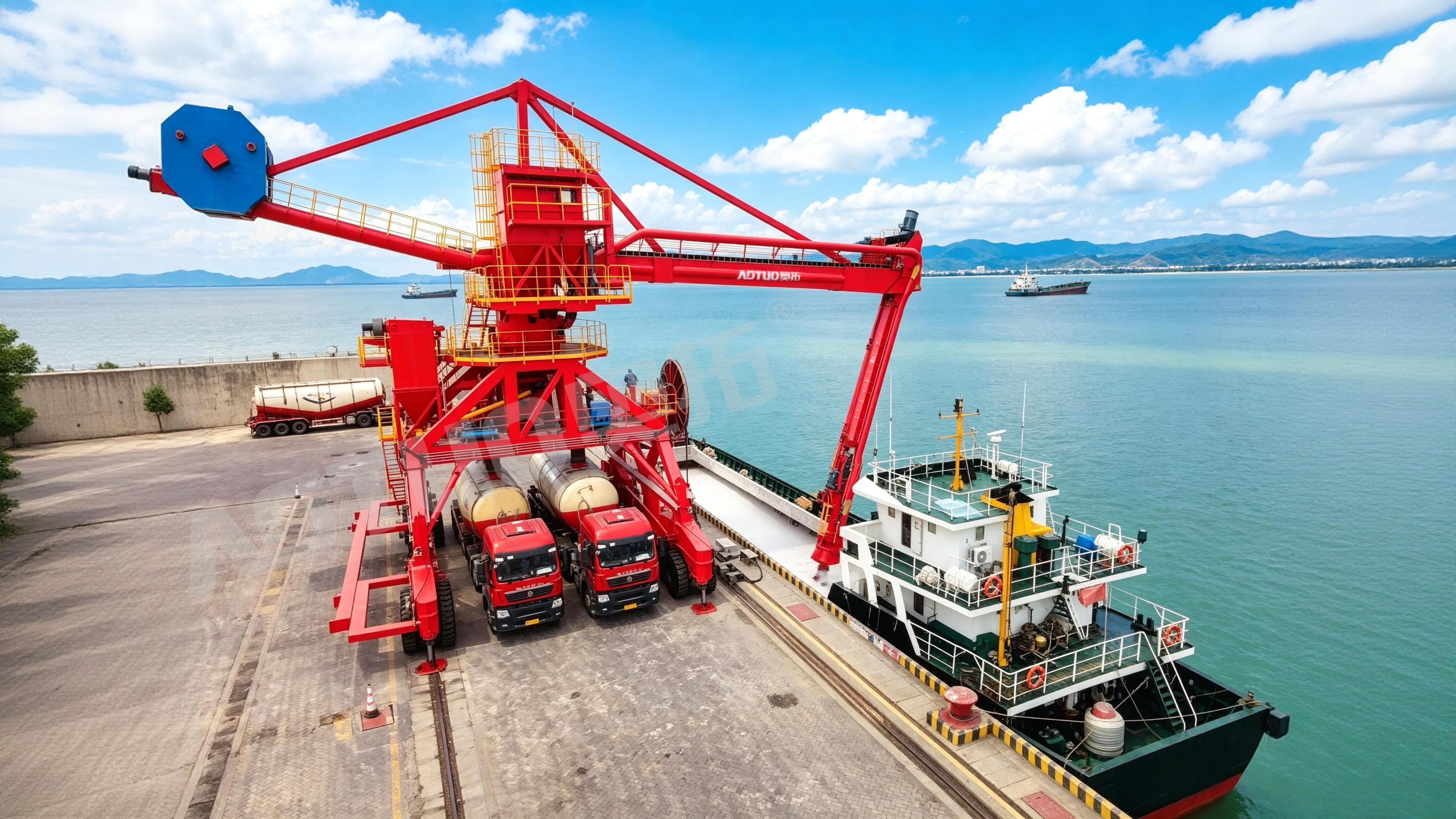
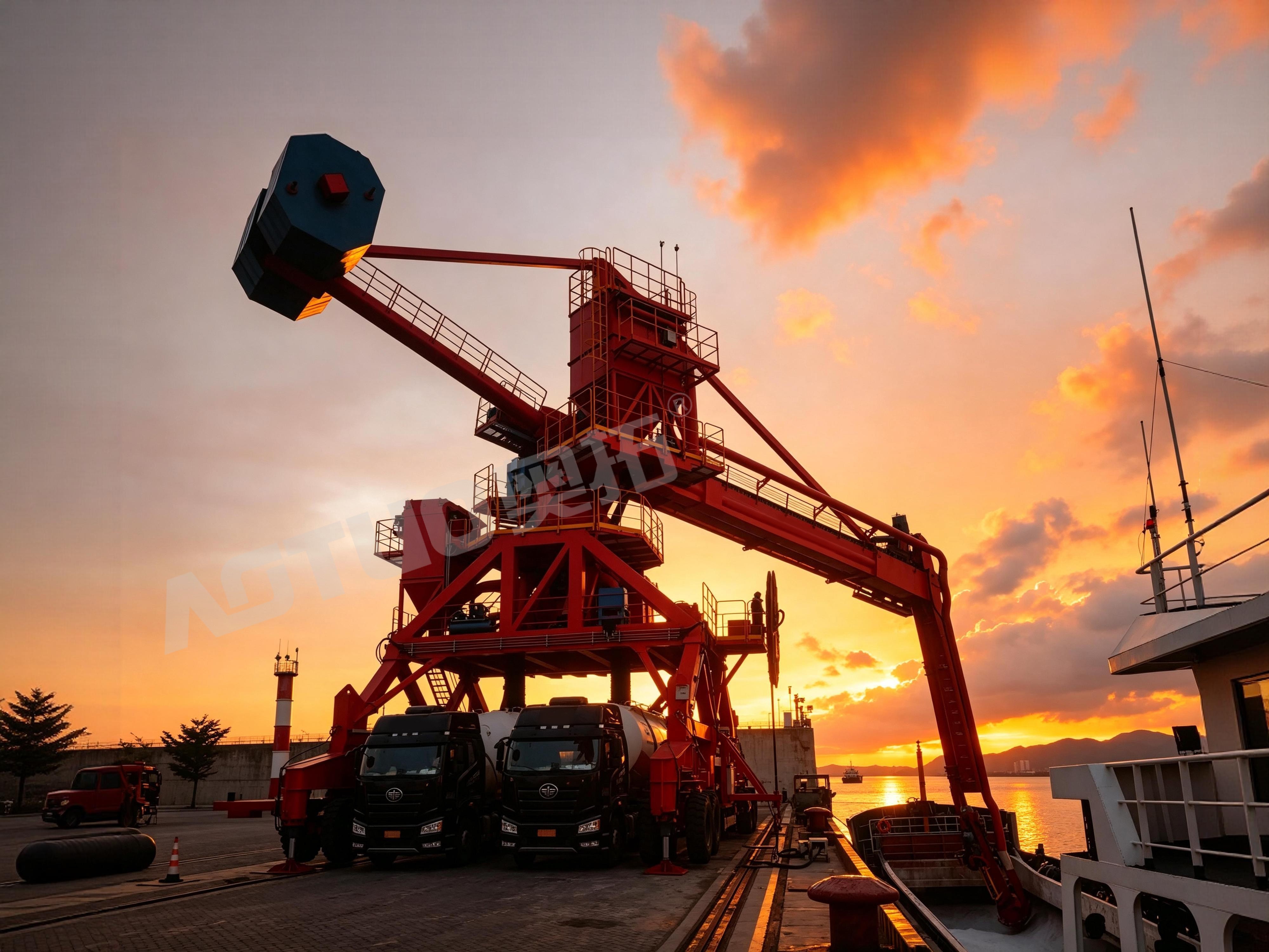
The "ship - machine - vehicle" integrated direct loading and unloading mode eliminates the secondary transfer process of "ship → storage yard → vehicles", achieving seamless connection of loading and unloading, shortening the logistics chain by more than 30%, significantly reducing loading and unloading losses, and improving the shipping efficiency.
The rated processing capacity of the equipment in this project is 400 tons per hour, capable of continuous, uniform and stable operation, suitable for efficient unloading of bulk goods such as grains, fertilizers, and sulfur, supporting the stable production and supply of regional supply chains.
As the cargo throughput of Hainan Free Trade Port continues to rise, the "dual carbon" goal is being deeply implemented in coastal ports.
The mobile tire unloading crane is expected to achieve large-scale replication in the Guangdong-Hong Kong-Macao Greater Bay Area, the Yangtze River Economic Belt, and the Beibu Gulf port cluster. Its "non-occupying the shoreline" feature aligns with the modern port's high-density, multi-commodity, and strong environmental protection requirements, providing a low-cost and highly flexible upgrade path for the renovation of old docks.
Aotuo will promote this technology to rise from an "enterprise solution" to a "national standard", explore integration with new energy power systems, reduce the carbon footprint throughout the life cycle, and develop from a "single breakthrough in Zhejiang manufacturing" to a "systematic answer" supporting the high-quality development of Chinese ports.
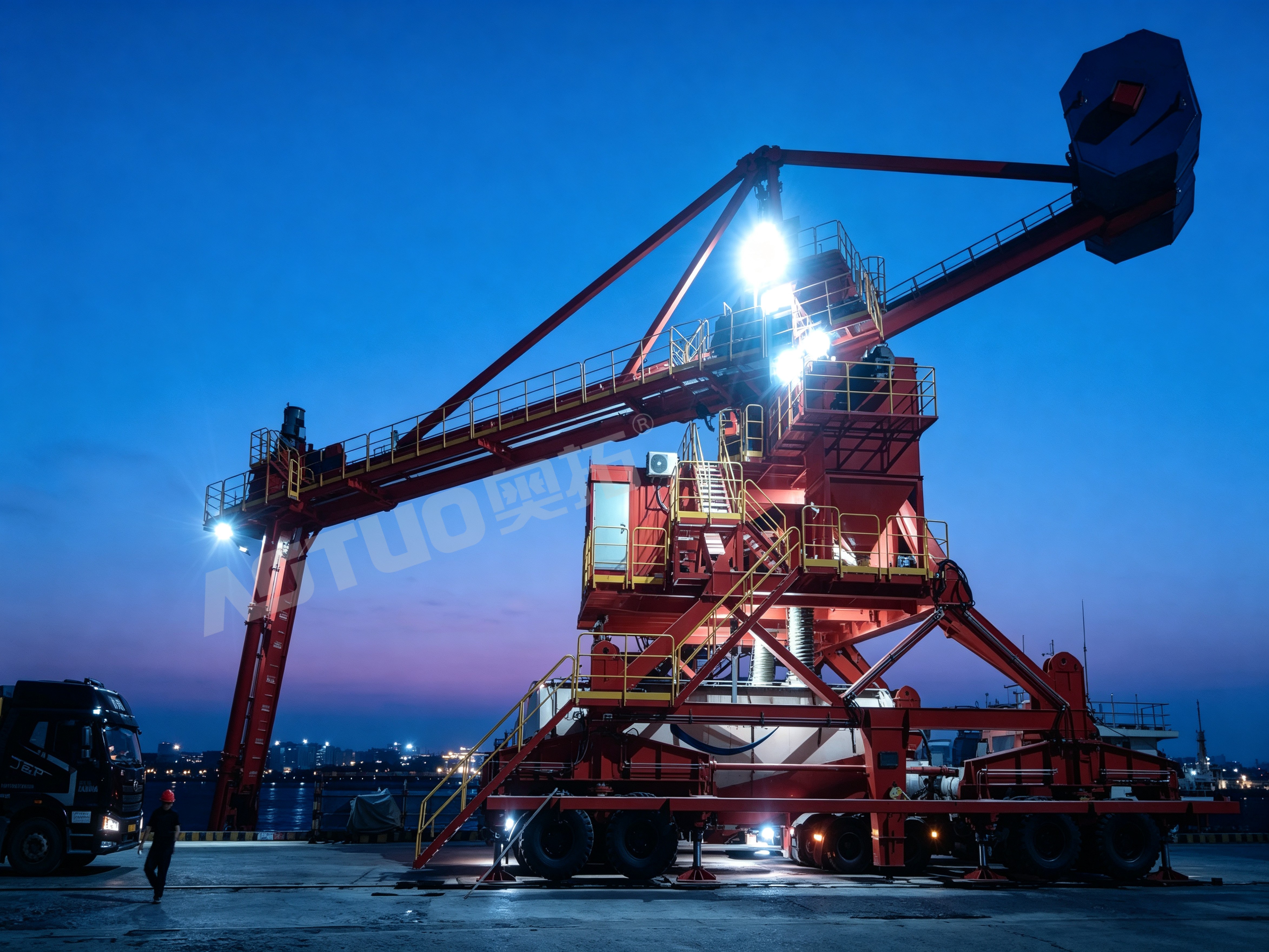
The equipment uses a heavy-duty engineering tire chassis, eliminating the need for tracks or fixed foundations. It can freely move and flexibly position itself on the dock surface, easily handling multi-berth operation needs, significantly improving equipment utilization, and truly achieving "one machine for multiple uses, available on call."
Breaking through the limitations of traditional fixed ship unloaders that "dominate" the front shoreline, the entire machine can be moved to the rear area when not in operation, without occupying valuable wharf shoreline operating space. This ensures efficient berthing and unberthing of large vessels while reserving ample space for general cargo or container operations, maximizing the utilization of shoreline resources.
In response to Hainan's stringent environmental protection requirements, the equipment integrates a fully enclosed screw conveyor system with fixed-point negative pressure dust collection. Materials are transported in a completely sealed manner from the ship's hold to the truck bed, preventing spillage and leakage. High-efficiency dust collectors are installed at key material drop points to suppress dust overflow at the source, contributing to the construction of a green port and enhancing Hainan's ecological environment.
An innovative integrated "ship-machine-truck" operation mode is adopted. After being lifted by a screw conveyor, materials can be directly loaded into trucks via a high-efficiency and environmentally friendly bulk loading machine, completely eliminating the traditional secondary transfer process of "ship → yard → vehicle". This significantly shortens the logistics chain, reduces loading and unloading losses, and significantly improves shipping efficiency.
Optimized propeller blade structure, rated handling capacity reaches 400 tons/hour, enabling continuous, uniform, and stable unloading operations. Compared to intermittent grab unloading, efficiency is significantly improved, especially suitable for the rapid unloading of light bulk cargoes such as grain, fertilizer, and sulfur, injecting strong momentum into the project's stable production and supply.
Does this mobile tire unloading crane require rails or concrete foundations? ▼
No, the equipment is designed with an all-wheeled mobile engineering tire chassis. It does not require fixed tracks, rails, or concrete foundations, allowing it to move freely and position flexibly on the dock surface.
How does the equipment improve the utilization of the dock shoreline? ▼
Unlike traditional fixed ship unloaders that permanently occupy the front shoreline, this mobile unit can be moved and parked in the rear area during non-operational periods. This releases shoreline resources, allowing other large vessels to berth and unberth efficiently.
What environmental protection measures are integrated into this system? ▼
The equipment features a fully enclosed screw conveyor system and a negative pressure dust suppression system. Materials are conveyed in a completely sealed manner from the ship's hold to the truck bed, preventing any spillage, leakage, or dust overflow.
What is the efficiency advantage of the "ship-machine-vehicle" direct loading mode? ▼
This integrated mode eliminates the traditional secondary transfer process of "ship → storage yard → vehicles." By enabling direct loading, it shortens the logistics chain by more than 30%, dramatically reducing loading losses and improving shipping efficiency.
What is the rated processing capacity and what types of cargo is it suitable for? ▼
The equipment has a rated processing capacity of 400 tons per hour (tph). It is highly optimized for continuous, uniform, and stable unloading of light bulk cargoes such as grains, fertilizers, and sulfur.
Where is this technology expected to be adopted next? ▼
With rising cargo throughput and strict environmental standards, this mobile tire unloading crane is planned for large-scale replication in the Guangdong-Hong Kong-Macao Greater Bay Area, the Yangtze River Economic Belt, and the Beibu Gulf port cluster.
Intelligence

High Efficiency
Revolution
Environmental