

Hot Products
AOTUO is a Chinese high-tech enterprise specializing in integrated solutions for dry bulk material port transfer systems, as well as the R&D, manufacturing, and service of high-end dry bulk material port handling equipment.
Contact Us
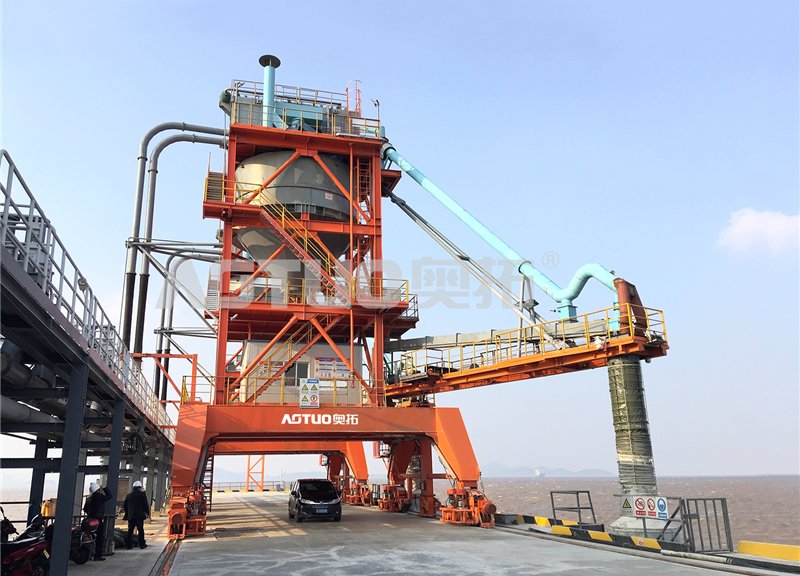
Mobile Eco-Friendly Ship Loader for Fly Ash - China Suppliers & Factory, 300-1,500 TPH Capacity
Project Overview
Project Introduction
This project involves the installation of a mobile environment-friendly ship loading system. The system transports fly ash delivered from the rear via pneumatic conveying to an airslide conveyor, which then transfers it to a telescopic chute for direct loading onto ships. The scope of work encompasses the entire process, including design, manufacturing, supply, transportation, installation, commissioning, and performance testing.
Technical Spec
Equipment Introduction
The basic process flow of the mobile environment-friendly ship loader is as follows (but is not limited to this): After the bulk carrier docks at the pier, the mobile environment-friendly ship loader moves into the operational area. The telescopic chute at the head of the ship loader aligns and connects with the cargo hold of the bulk carrier. Once the connection is established, the pneumatic conveying system at the rear begins transporting the material to the feeding hopper of the ship loader. The material is then conveyed through an airslide to the telescopic chute at the head, enabling ship loading.
Frequently Asked Questions
What is the primary function of this mobile ship loading system?
The system is designed to transport fly ash delivered via pneumatic conveying from the rear to an airslide conveyor, which then transfers it to a telescopic chute for direct, environment-friendly loading onto bulk carriers.
What scope of work is covered under this project?
The project covers the complete development cycle, including system design, manufacturing, supply, transportation, installation, commissioning, and final performance testing.
How does the ship loader connect to the bulk carrier?
Once the bulk carrier docks at the pier, the mobile loader moves into position, and its telescopic chute at the head aligns and directly connects with the cargo hold of the ship to prevent material escape.
What conveying mechanism transfers the material within the loader?
The material is first fed into the hopper of the loader via the rear pneumatic conveying system, and then it is moved through an airslide conveyor to the telescopic chute at the head for loading.
Why is this system considered environment-friendly?
It utilizes an enclosed pneumatic conveying system and airslide conveyor along with a sealed telescopic chute connection to minimize dust emission and environmental impact during the loading process.
01
Intelligence

02
High Efficiency
03
Revolution
04
Environmental